
The 2025–2026 Arabian Gulf cruise season was expected to be one of the region’s strongest yet. Dubai, Doha, Abu Dhabi and Bahrain had become major winter cruise hubs, attracting European and international cruise lines eager to capitalize on the growing market.
But geopolitical tensions and security concerns quickly turned the region into one of the cruise industry’s biggest operational crises in years. Several cruise lines found themselves with ships locked in the Gulf ports, forced to cancel sailings and rethink entire deployment strategies.
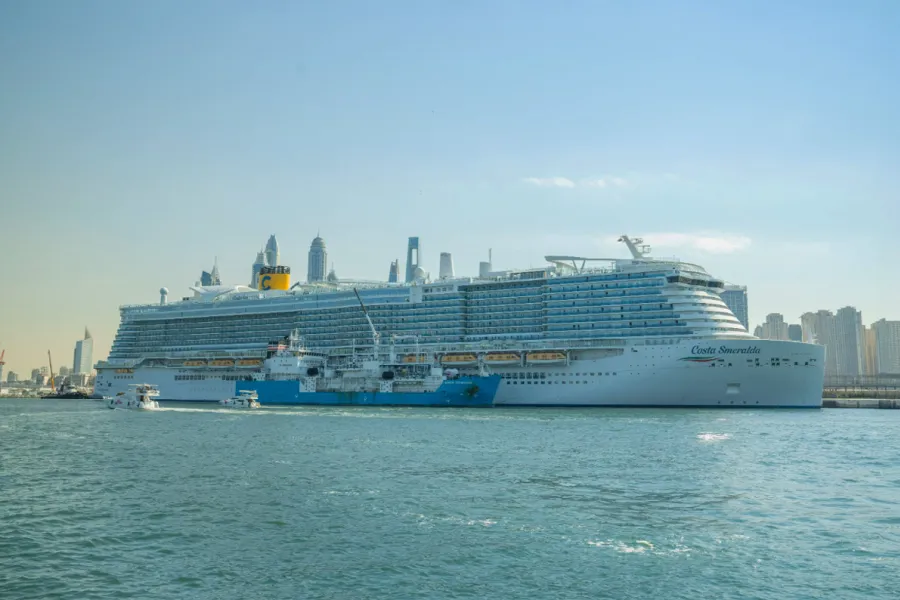
However, two companies that stepped away early, Costa Cruises and AIDA Cruises, both Carnival Corporation brands — may now look like the most cautious operators in the industry.
Costa and AIDA Cancel Early – Avoiding the Worst
Months before the crisis escalated, Costa Cruises and AIDA Cruises decided to cancel their entire Arabian Gulf programs for the winter 2025–2026 season, due to safety concerns and regional instability.
Costa had originally planned to deploy Costa Toscana in Dubai for winter itineraries, while AIDA scheduled AIDAprima for cruises in the region. Instead, both brands withdrew completely, marking the first time in decades that AIDA would not offer Gulf cruises.
At the time, the move raised eyebrows in the industry. The Gulf had become a lucrative winter market, and several competitors saw the withdrawal as an opportunity to capture additional demand.
That opportunity quickly turned into a risk that backfired.
With Costa and AIDA leaving the region, other cruise lines increased their presence, hoping to fill the gap and eventualy increase profits
Among the most aggressive was TUI Cruises, which deployed two ships to the Arabian Gulf for the 2025/26 cruise season:
Mein Schiff 4 operating from Abu Dhabi and Mein Schiff 5 operating from Doha and Dubai
The company believed the market still had strong potential and planned to expand capacity significantly with 2 of its 8 ships deployed in the region.
In fact, the German cruise line had previously announced that deploying two ships in the region was a milestone, marking the first time it had this level of presence in the Gulf market.
But that strategy also doubled the company’s exposure when the crisis intensified.
TUI Cruises had already been active in the Middle East market in previous winters, but usually with more limited capacity.
For the 2025–2026 season, the company expanded operations with two ships simultaneously, increasing both passenger numbers and operational complexity.
When regional tensions escalated, the cruise line was forced to cancel sailings scheduled to depart in late February and early March 2026.
Both vessels were left in Gulf ports while the company reassessed operations.
The situation exposed a key risk in cruise deployment planning: concentrating multiple ships in a politically sensitive region.
Celestyal: The Biggest Casualty
While TUI Cruises faced major disruption, Celestyal Cruises appears to be the biggest loser of the season.
The company had positioned it’s fleet of two ships — Celestyal Journey and Celestyal Discovery — in the Arabian Gulf, intending to build a strong winter program in the region.
When the crisis escalated, the company had to cancel remaining Gulf cruises, repositioning voyages, and even upcoming Mediterranean cruises, because the ships could not leave the region.
Another company caught in the crisis is Aroya Cruises, the Saudi-backed cruise brand.
Unlike larger cruise lines with global fleets, Aroya operates one mega cruise ship, the Aroya Manara with capacity of 3362 passengers.
That vessel was deployed in the Arabian Gulf for its new regional cruise program. When tensions escalated, the ship became effectively stranded along with the rest of the fleet operating in the region.
For a single-ship cruise line, the risk is even greater: if the ship cannot sail, the entire company’s operations stop.
One of the most critical strategic mistakes the cruise operators underestimated is geography. Ships in the Persian Gulf have only one exit route
The Strait of Hormuz
This narrow passage between Iran and Oman connects the Persian Gulf to the Arabian Sea.
If security conditions deteriorate or military activity increases like it did, ships cannot simply reroute through another ocean route. Unlike the Mediterranean or Caribbean, there is no alternative passage.
This makes the Gulf one of the most geographically vulnerable cruise regions in the world.
Cruise lines often evaluate geopolitical risk that can escalate rapidly.
Did Costa and AIDA know something other cruise lines didn’t? This is highly unlikely. What they did was assess the situation with greater caution.
In the end, the companies that pulled out early Costa and AIDA, have made the safest decision.
What initially looked like a missed opportunity to capture market share has now turned into a case study in strategic risk management.
Meanwhile, competitors who rushed in to fill the gap now face cancellations, stranded ships, and complex repositioning challenges — a reminder that in cruising, geopolitics can change the course of an entire season overnight.