
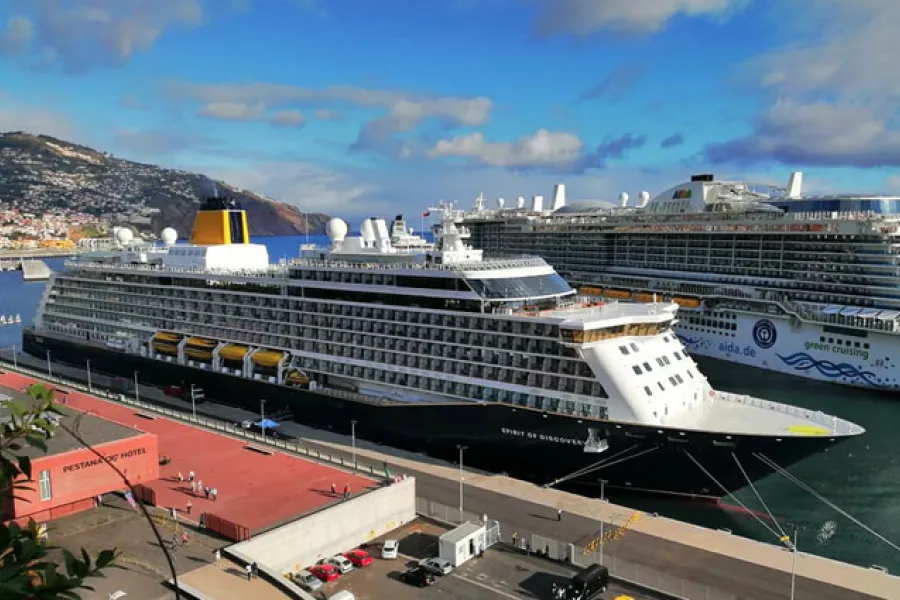
Accident investigation released by the UK’s Marine Accident Investigation Branch (MAIB) has shed light on the dramatic incident aboard the cruise ship Spirit of Discovery, where more than 100 passengers were injured after the vessel lost propulsion while crossing the Bay of Biscay during a powerful storm.
The incident occurred shortly after 12:30 p.m. on November 4, 2023, as the Saga Cruises vessel was returning to Portsmouth at the end of a Canary Islands voyage. According to the official MAIB Investigation Report 6/2026, violent seas caused the ship’s propulsion system to shut down, leaving the vessel struggling in rough weather for hours while engineers worked to restore control.
Storm Conditions Triggered Propulsion Failure
Investigators found that the ship encountered extremely rough seas with waves reaching up to 10 meters and winds approaching hurricane force. The violent motion of the vessel caused its propellers to become partially exposed to the water, triggering an overspeed condition that automatically shut down the propulsion pods.
Compounding the problem, the propulsion control system unexpectedly rotated both pods to a position 90 degrees from the vessel’s heading, severely limiting the crew’s ability to maintain control.
For nearly 18 hours the ship battled intermittent propulsion shutdowns as engineers repeatedly restarted the system while the vessel drifted in heavy seas.
More Than 100 Passengers Injured
At the time of the incident, the ship carried 943 passengers and 503 crew members. The sudden loss of propulsion caused the vessel to pitch and roll violently, throwing passengers off balance and sending unsecured furniture sliding across public areas.
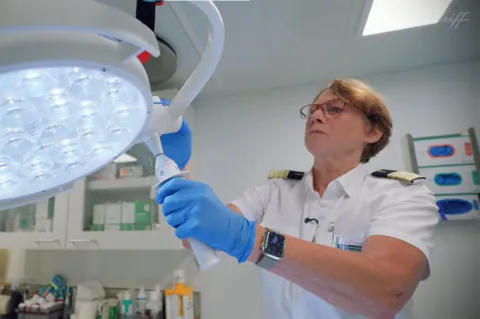
The ship’s medical team treated 115 passengers for injuries, including fractures, head injuries, and severe bruising. Eight passengers required hospital treatment upon arrival in Portsmouth.
One passenger, 85-year-old Trevor Gilks, suffered a serious spinal injury after a chair he was sitting in toppled during a violent roll of the ship. Despite medical treatment onboard, he later died in hospital four days after the incident.
Decision to Cross the Bay of Biscay Questioned
The investigation also raised concerns about the decision to continue the crossing despite severe weather forecasts.
Weather routing services had warned of storm-force winds and waves of up to 13 meters, and one advisory specifically suggested that the vessel seek shelter south of Portugal instead of heading north toward the Bay of Biscay.
However, the ship continued its passage after a planned port call in A Coruña was canceled due to port closure.
Investigators concluded that the decision to cross the Bay of Biscay in these conditions was not effectively challenged by crew members or operational teams ashore.
Emergency Response Challenges
The report also highlighted shortcomings in the ship’s emergency response.
Although a large number of passengers were injured within a short period of time, the ship’s mass casualty incident plan was not activated, leaving the onboard medical team struggling to handle the volume of cases.
In addition, the investigation found that the delay in identifying the passenger’s spinal injury resulted in suboptimal medical treatment.
Safety Recommendations for the Industry
Following the investigation, several safety recommendations were issued.
The UK Maritime and Coastguard Agency has been asked to consider new international requirements for electronic inclinometers to help ships better monitor extreme vessel motion.
Industry body Cruise Lines International Association (CLIA) has also been urged to increase the number of trauma-trained medical staff carried onboard cruise ships and to update guidelines on securing furniture and equipment during heavy weather.
According to the report, Saga Cruises and other organizations involved have already taken steps to improve voyage planning procedures, heavy weather preparation, and onboard medical response systems.
The MAIB stressed that the purpose of the investigation is to improve safety at sea and help prevent similar incidents in the future.