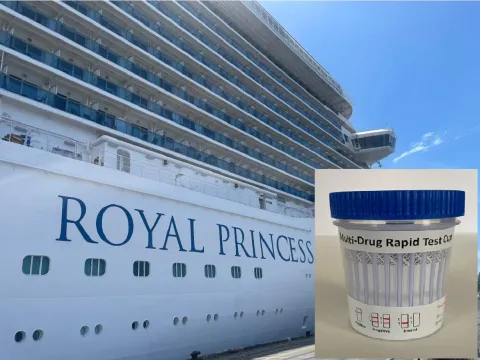


Brazil’s Labor Committee of the Chamber of Deputies has approved a proposal clarifying that Brazilian crew members hired through recruitment agencies to work on cruise ships do not have an employment relationship under Brazilian labor law (CLT).
In other words, the proposal says that they are not considered under Brazilian labor regulations. The contract is not governed by CLT, Brazil’s standard labor code, and they will work under international maritime rules.
The proposal still needs approval from the Constitution, Justice and Citizenship Committee, and then from the full Chamber and Senate before it becomes law.
While the legislative update is designed to reassure cruise companies, it does little to change the immediate situation.
By late 2024, several major cruise lines including Princess Cruises, stopped recruiting Brazilian crew members. Applicants already in the final stages of onboarding suddenly received notices that their positions were canceled.
Some were told that cruise lines were temporarily avoiding Brazilian hiring due to “high legal risk.” Others said agencies simply stopped processing Brazilian applications without explanation. These hiring suspensions have left many disappointed and uncertain about their future. Crew Center received messages from crew saying they felt “punished for something they did not do,” while others expressed fear that cruise lines may permanently shift recruitment to other countries.
The MLC still protects crew already onboard, but the biggest impact is felt by those trying to enter the industry.
If the law is fully approved, it could offer cruise lines the legal clarity they need to resume hiring. It would confirm that hiring Brazilians does not expose companies to the rules of CLT, something they have long argued.
However, cruise lines tend to wait for 100% certainty before changing policy. Even after the proposal becomes law, companies may observe how courts interpret it before reopening recruitment.
Long before this new legislation was drafted, Brazil saw a growing number of legal disputes involving former cruise ship employees. Several ex-crew members filed lawsuits in Brazilian labor courts claiming they should be entitled to CLT rights — including overtime, FGTS, severance, and other protections.
Surprisingly to the cruise industry, some courts ruled in favor of the crew. These rulings suggested that, under certain circumstances, CLT protections could apply even to maritime contracts governed internationally.
From the perspective of cruise companies, this introduced significant legal and financial risk:
-
If Brazilian courts could impose CLT standards retroactively,
-
Companies could face massive liabilities for past and future contracts.
This fear is what caused the hiring freeze. Cruise lines acted to protect themselves until the legal environment became clearer.
The new proposal attempts to provide that clarity, but it arrived after the industry had already adjusted its hiring strategies.