
13 years 4 months ago
General Conditions of Employment for Crewmembers
According to the Cruise Lines International Association (CLIA), is the world's largest cruise association, member cruise lines (there are 26) must conduct their worldwide operations according to the “highest level of business integrity and fair treatment of employees.” All workers have the basic right to be respected and treated in a fair and just manner.
When it comes to certain aspects of working conditions, the CLIA’s policies rest with the flag state regulations. However, according to CLIA guidelines, all crewmembers are entitled to room and board at no cost and are expected to live in a clean, well-maintained environment. CLIA policy requires that crew areas be regularly inspected to ensure safety is maintained. The work environment for all crewmembers should be monitored and governed through safety and quality management systems in order to prevent accidents from taking place. In addition, cruise line sponsored medical care must be provided for all crewmembers working onboard vessels under CLIA’s policy. Furthermore, in the event that a crewmember becomes injured or ill while working, cruise lines are entitled to offer the crewmembers sick leave.
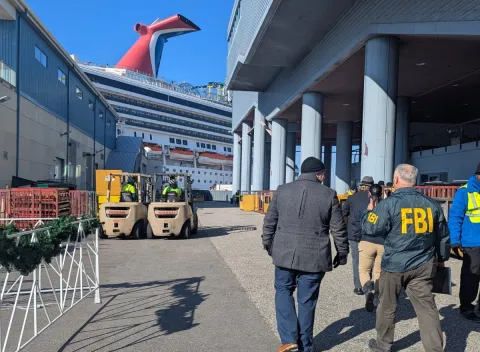
The cruise industry places the highest priority on the safety and security of all whom are onboard – including crewmembers. Every person onboard a cruise ship, from captains to chefs to the cleaning staff, is to be placed on an official manifest. Security personnel are to be employed onboard every CLIA member line vessel in order to promote safety for everyone on the ship. Federal and state authorities have the right to investigate crimes onboard cruise ships. The FBI has the authority to investigate and prosecute crimes in international waters involving Americans, and the U.S. Coast Guard also has jurisdiction for inspection and enforcement of international safety and security standards for all vessels that call at U.S. ports. But what happens when the ships do not call at U.S. ports and crewmembers are injured? Will all crewmembers be treated the same following an illness or injury, regardless of the vessel they are sailing on?
Why Safety Protocols for Crewmembers are Inconsistent Across Cruise Lines
Cruise lines try to avoid taking responsibility for accidents, especially when the accident involves a crewmember. Safety reform is an important subject of debate in the cruise industry, especially after the many accidents and illnesses that befell crewmembers during 2012. A main problem with crewmember safety is that standards for their protection are not as high as they should be. In the United States, maritime laws and safety protocols are higher than in other areas of the world. However, while there are 256 registered cruise ships in the world, only one of these vessels is registered in the U.S.
Cruise companies register their vessels in foreign countries because the safety protocols in other nations are not as high as they are in the United States. This allows the cruise lines to avoid taking responsibility and blame when a crewmember is injured or killed. This also allows cruise lines to avoid paying damages in their full extent to injured workers. Crewmembers may not always be sufficiently trained and cruise lines may not always provide the safest of environments for them.
When an accident does occur in which a crewmember is injured, they have a right to seek legal help with a maritime attorney in order to fight for their rights and ensure they are protected.
Crewmember Rights and Why Seeking Legal Help is Crucial
Crewmember rights vary across nations, but in the United States, cruise ship crewmembers have a right to be protected from dangers at sea, in port and onboard their respective vessels. Crewmembers are considered seamen or seafarers because they spend the majority of their time working onboard ships. This entitled crewmembers to certain benefits and rights as provided by Maritime Law.
In the event that a crewmember is injured onboard a cruise line, certain protocols must be followed and the injured individual is entitled to certain benefits. In the U.S., crewmembers have a right to receive free medical care, food and shelter following maritime accidents. They also have a right to work in an environment that is free of discrimination and violence. Whether the accidents are the fault of the cruise lines themselves or because of another worker’s wrongdoing or negligence, injured crewmembers have a right to seek legal help to file a seaman’s claim to fight for the benefits they deserve and to make sure those who are responsible for the incident are held accountable.
However, despite where a cruise ship is flagged, there are certain standards of safety and rights that must be upheld, regardless of the country in which the accident took place or the flag that the ship flies. The United Nations established two agencies to deal with international maritime issues: the International Maritime Organization (IMO), based in London and the International Labor Organization (ILO), based in Geneva. Both organizations have detailed specific regulations dealing with the safety, health and welfare of seafarers, including the crewmembers of cruise ships. While these conventions are adopted in the United States, 41 other countries also abide by these protocols.
Immediately after an accident takes place, crewmembers should report the incident to their shipboard security department and obtain a copy of their written report. They should also take photographs, if possible, of the accident scene and write down the names and contact information of each witness to the incident. The victim should also obtain medical help onboard the vessel as quickly as possible. However, even after all these steps, crewmembers may still be denied benefits and compensation.
Because maritime law is so complex, hiring an experienced attorney is essential for all crewmembers who are injured. Usually, the law that will be followed is of the flag ship on which the crewmember is serving, however, the laws of the worker’s country of residence or, in certain conditions, the law of the port state in which a ship is berthed may also be relevant. Experienced maritime lawyers, like those of Miami, Florida-based Lipcon, Margulies, Alsina, & Winkleman, P.A., know exactly what to do in these situations to secure injured parties the compensation they deserve.
The Difference an Experienced Seafarer Attorney can Make
Because of the vast inconsistencies across cruise lines when it comes to safety policies and what crewmembers are entitled to, hiring an experienced seafarer attorney can make all the difference in the world. Lipcon, Margulies, Alsina & Winkleman, P.A. has been representing injured crewmembers since 1971 and has been recognized as the top firm protecting seafarer rights. The attorneys at the firm have spent years researching and promoting maritime safety standards and know just how adamant cruise lines are in avoiding blame for incidents. However, Lipcon’s attorneys are just as adamant in protecting their clients’ rights. Through careful and passionate litigation, the firm has been able to secure damages for injured crewmembers in the face of obstinate cruise lines.
One case was resolved in favor of a cabin stewardess who was injured while working on an oceanic Cruises vessel. The plaintiff injured her back while lifting a full-size bed and the pain radiated to her left leg. Following medical evaluations, the plaintiff was diagnosed with two lumbar disc fractures and Lipcon was able to secure a settlement for the victim.
In another crewmember case, the plaintiff, a cook onboard a Norwegian Cruise Line ship, sustained burns while carrying a pan of hot caramelized sugar. While the cruise line argued it was not their responsibility, Lipcon was able to secure damages for the injured worker in this case as well.
Regardless of how minimal or how extensive an injury, crewmembers have specific rights, no matter where the accident took place. Lipcon’s attorneys are always available to help workers seek justice for their pain and suffering.
About Lipcon, Margulies, Alsina & Winkleman, P.A.
Lipcon, Margulies, Alsina & Winkleman, P.A. is an award-winning maritime law firm based in Miami, Florida. The firm represents crewmembers and passengers injured while onboard a cruise ship, cargo vessel or personal water craft. Commended for their distinct and enduring commitment to integrity in the field of admiralty law, Lipcon has consistently received the “AV” rating by Martindale-Hubbell for their ethical standards.
Event date description
22.01